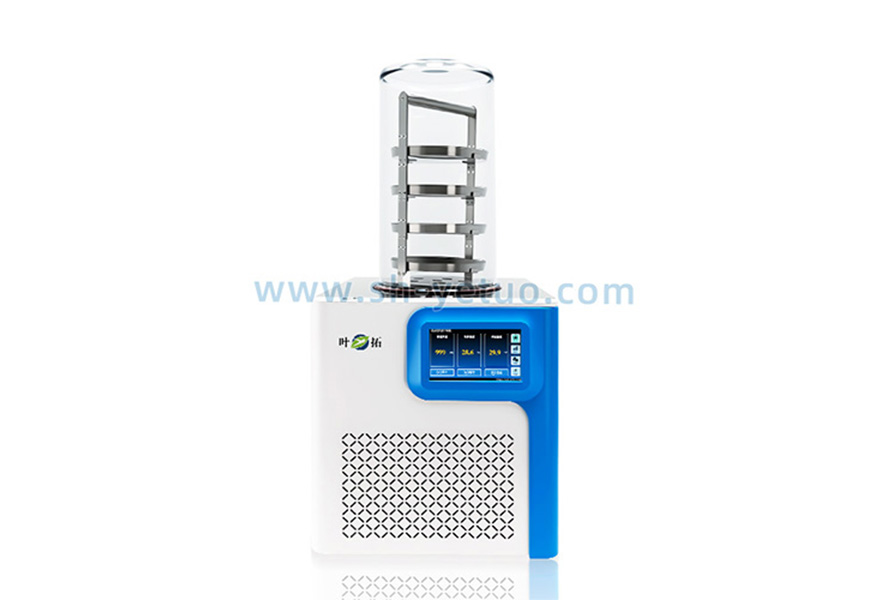



Many users of freeze-drying machines face common challenges such as poor rehydration properties, such as "freeze-dried fruits cannot be soaked, resulting in a dull taste", "insufficient activity of bacterial strains after rehydration, making it difficult to advance experiments", and "freeze-dried vegetables become soft and rotten after rehydration. Many people attribute the problem to the material itself or improper storage in the later stage, but overlook the key factor: the "analytical drying temperature" setting of the freeze dryer is the core factor determining rehydration.
The essence of rehydration is the ability of freeze-dried products to quickly absorb moisture, restore their original form and activity, which depends on the "porous structure" formed inside the material during the freeze-drying process. If the porous structure is damaged or blocked, water will be difficult to penetrate, and the rehydration ability will naturally be greatly reduced. And analyzing the drying temperature is a key parameter that affects the integrity of porous structures.
The drying stage is the final stage of freeze-drying, aimed at removing residual adsorbed water (approximately 5% -10% of total moisture) from the material. If the temperature is set too high at this time, it will cause the residual ice crystals inside the material to melt quickly, and the liquid water cannot sublime in time. Instead, it will re infiltrate the material cells, causing cell rupture, structural collapse, and damage to the porous structure; If the temperature is too low, the adsorbed water is difficult to remove, the moisture content of the material exceeds the standard, and it is prone to moisture absorption and agglomeration during storage, which will also affect the rehydration properties.
When a certain food processing factory produced freeze-dried mangoes, it was plagued by rehydration problems for a long time: the rehydration time of the product exceeded 10 minutes, the taste was sticky, and consumer complaints continued. After investigation by the technical team, it was found that the problem lies in the analytical drying temperature setting of the freeze dryer - previously, in order to speed up efficiency, the temperature was set to 45 ℃, far exceeding the analytical temperature of mangoes (35 ℃ -40 ℃). After adjusting the parameters, the temperature during the analysis stage remained stable at 38 ℃, and the analysis time was extended by 2 hours. The results were surprising: the rehydration time of freeze-dried mangoes was shortened to 3 minutes, and the taste was restored to the fresh, sweet, crispy, and tender taste of mangoes. The repurchase rate increased by 30%.
For biological samples, precise control of drying temperature is more crucial. During the processing of yeast strains at a certain research institution, the cell structure of the strains was damaged due to excessively high analysis temperature (30 ℃), resulting in a retention rate of only 65% after rehydration. After replacing the freeze dryer with a temperature control function, the analysis temperature was set to 25 ℃ based on the characteristics of the yeast strain, and the temperature fluctuation was maintained at ≤± 0.5 ℃ through the PID intelligent temperature control system of the equipment. The rehydration activity of the final strain was increased to 95%, meeting the experimental requirements.
It is worth noting that the analytical drying temperature is not a fixed value and needs to be flexibly adjusted according to the characteristics of the material. Due to the thin cell wall of fruit and vegetable materials, the analytical temperature is usually between 30 ℃ -40 ℃; Biological samples (such as bacterial strains and cells) are more sensitive to temperature, and the analysis temperature needs to be controlled between 20 ℃ and 30 ℃; And for medicinal materials and other materials, the analytical temperature can be appropriately increased to 40 ℃ -50 ℃, but it needs to be accompanied by a slow heating rate to avoid structural damage.
In addition, the synergistic effect of vacuum degree and temperature during the drying stage can also affect rehydration. The freeze-drying machine, through the linkage of a two-stage vacuum pump and a precise temperature control system, can adjust the analytical temperature while maintaining a stable vacuum degree (≤ 10Pa), ensuring the slow sublimation of adsorbed water and preserving the porous structure of the material to a large extent. After using such equipment in a certain medicinal herb processing plant, the rehydration rate of freeze-dried Astragalus membranaceus increased from 75% to 92%, and the dissolution rate of active ingredients also increased by 20%.
The rehydration ability of freeze-dried products is one of the core indicators for testing the effectiveness of freeze-drying, and the precise control of drying temperature is the key to ensuring this indicator. Choosing a freeze-drying machine with precise temperature control function and the ability to flexibly adjust parameters based on material characteristics, while also mastering the optimal analytical temperature range for different materials, is necessary to ensure that the freeze-dried product retains nutrients and activity while also having excellent rehydration properties. Have you also encountered the problem of poor rehydration in production or experimentation?