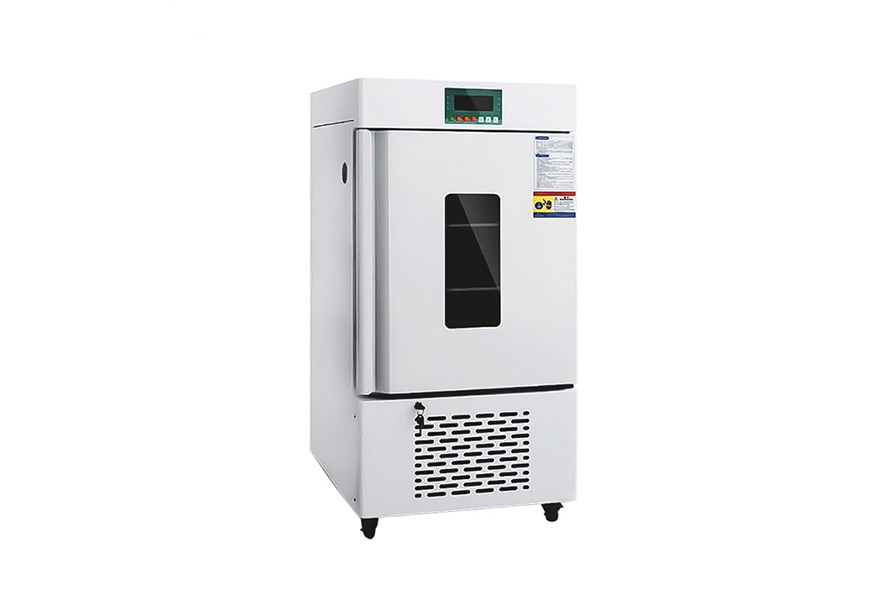



In fields such as life science research, medical testing, and food microbiological testing, the Shanghai Yetuo incubator is an indispensable core equipment. It is like a precise "environmental steward" that can simulate key conditions such as temperature, humidity, and gas concentration required for biological growth, providing a stable and suitable growth environment for cells, microorganisms, and other living organisms, helping researchers explore the mysteries of life and promote technological breakthroughs. With the continuous refinement of application requirements, Shanghai Yetuo incubators have developed multiple categories, each with its own unique design principles and applicable scenarios. The following will analyze the types and characteristics of mainstream incubators one by one, among which * * Biochemical incubators * *, as an important type that meets the needs of multiple scenarios, will be emphasized in the classification.
1、 Classified by core functions and application scenarios: from basic to specialized coverage
There are significant differences in the requirements for cultivation environments in different research scenarios. Some focus on single temperature control, while others require consideration of temperature, humidity, and biochemical reaction conditions. Based on this, incubators can be divided into basic temperature control type, specialized environmental type, and comprehensive functional type. Biochemical incubators belong to the core representative of comprehensive functional type.
1. Basic temperature controlled incubator: meets simple temperature control requirements
This type of incubator focuses on temperature control and has a relatively simple structure, suitable for basic cultivation scenarios without specific requirements for humidity and gas. It mainly includes room temperature incubators and high-temperature incubators.
-Room temperature incubator (room temperature~60 ℃): heated by electric heating tubes and controlled by fan circulation, with a temperature control accuracy of ± 0.5 ℃~± 1 ℃. It is commonly used for the cultivation of common bacteria such as Escherichia coli and the detection of total bacterial count in food. For example, in milk hygiene testing, the inoculated sample needs to be placed in a 36 ℃ room temperature incubator for 48 hours to observe the growth of bacterial colonies.
-High temperature incubator (60 ℃~300 ℃): Using corrosion-resistant stainless steel heating tubes, it can achieve high temperature environment and is suitable for cultivating high-temperature microorganisms (such as Bacillus) and drying glassware. For example, the cleaned utensils in the laboratory need to be dried in a high-temperature incubator at 120 ℃ to ensure cleanliness and absence of impurities.
2. Specialized environmental incubator: simulating special growth conditions
For living organisms that require specific gases, light, or anaerobic environments, specialized environmental incubators are designed through customization to accurately match their specific growth needs, mainly including carbon dioxide incubators, anaerobic incubators, and light incubators.
-Carbon dioxide incubator (5% CO ₂+95% air as the main component): Designed specifically for mammalian cells (such as liver cells and tumor cells), it uses infrared/thermal conductivity sensors to control carbon dioxide concentration, maintain stable pH value of the culture medium, and control temperature (35 ℃~39 ℃, close to human body temperature) and humidity (relative humidity ≥ 95%). It is the core equipment for vaccine development and cell therapy. For example, in the production of COVID-19 vaccines, Vero cells need to be cultured in a 5% CO2 environment to ensure activity and proliferation efficiency.
-* * Anaerobic incubator (oxygen concentration<0.1%) * *: Designed with a "dual chamber structure+palladium catalyst", it uses nitrogen and hydrogen to replace air and absorb residual oxygen, providing an anaerobic environment for anaerobic bacteria (such as tetanus bacilli and bifidobacteria), suitable for clinical anaerobic bacteria detection and intestinal microbiota research. For example, when analyzing periodontal pathogens, samples need to be cultured in an anaerobic environment in order to accurately obtain microbial data.
-Light Incubator: Equipped with adjustable LED/fluorescent light sources, it can simulate different light intensities (0-20000 lux) and cycles (such as 16 hours of light/8 hours of darkness), combined with temperature and humidity control, designed specifically for plant tissue culture and photosynthesis research. For example, in the cultivation of orchid tissue culture seedlings, 16 hours of light exposure combined with 25 ℃ temperature and 70% humidity is required for photosynthesis and growth.
3. Comprehensive functional incubator: catering to multi-dimensional environmental needs
This type of incubator integrates multiple control functions such as temperature and humidity, and can cope with more complex cultivation scenarios. Biochemical incubators are a typical representative of this type, as well as constant temperature and humidity incubators, oscillation incubators, etc.
(1) Biochemical incubator: a versatile tool that balances biochemical reactions and microbial cultivation
The core feature of a biochemical incubator is that it has both precise temperature control and humidity regulation functions. Some high-end models can also be equipped with refrigeration systems to achieve a wide range of temperature control from low temperature to room temperature to high temperature (usually 0 ℃~60 ℃, some can reach -10 ℃~60 ℃). It can meet the basic requirements of microbial cultivation and adapt to the stable temperature and humidity environment required by biochemical reactions. Therefore, it is widely used in fields such as biochemistry, microbiology, medicine and health.
-Design principle: Adopting a bidirectional temperature control system of "compressor refrigeration+electric heating tube heating", combined with ultrasonic or electric humidification devices, and forced convection by fans, to ensure temperature uniformity (± 0.5 ℃~± 1 ℃) and humidity stability (40% RH~95% RH) inside the box; Some models will also be equipped with ultraviolet killing lamps, which can regularly reduce the risk of bacterial contamination in the indoor environment.
-* * Typical application scenarios * *:
-Microbiological research: Cultivate molds and yeasts that require stable temperature and humidity. For example, when detecting the total number of molds in food, place the sample in a biochemical incubator at 25 ℃ and 75% RH for 5 days to observe the growth morphology of the molds.
-Biochemical reaction experiment: used for enzymatic reactions, protein denaturation experiments, etc. When studying the activity of amylase, the reaction needs to be carried out in an environment with a constant temperature of 37 ℃ and 60% RH to ensure stable enzyme activity and accurate data.
-Stability testing of drugs and food: Simulate the deterioration process of drugs and food under different temperature and humidity conditions, such as testing the stability of Bao health products in an environment of 40 ℃ and 75% RH, and evaluating their shelf life.
(2) Constant temperature and humidity incubator: focusing on high precision temperature and humidity control
Similar to biochemical incubators, constant temperature and humidity incubators also focus on dual control of temperature and humidity, but place more emphasis on "high precision". The temperature control range is usually 10 ℃~60 ℃, and the humidity control range is 40% RH~95% RH. The temperature control accuracy can reach ± 0.3 ℃, and the humidity control accuracy is ± 3% RH. They are mainly used for experiments that require high environmental accuracy, such as measuring the germination rate of plant seeds (comparing the germination performance of different varieties in a unified environment of 25 ℃ and 85% RH), and testing the microbial stability of cosmetics (evaluating the risk of microbial growth in simulated storage environments).
(3) Oscillatory incubator (shaker incubator): a "dynamic environment teacher" that balances mixing and cultivation
Integrating the functions of "incubator" and "shaker", on the basis of precise temperature control (room temperature~60 ℃), through reciprocating or rotating oscillation (frequency 50~300rpm), the liquid culture medium and oxygen are fully mixed to meet the growth needs of microorganisms (such as actinomycetes and yeast) that require aerobic respiration. For example, in the production of kang nutrients, when cultivating actinomycetes that produce kang nutrients, oscillatory motion can facilitate the contact between actinomycetes and nutrients, thereby increasing the yield of kang nutrients; At the same time, some models can also be equipped with humidification function to adapt to complex cultivation scenarios that require temperature, humidity, and oscillation.
2、 Supplementary classification by temperature control range: temperature tolerance adapted to different living organisms
In addition to functional classification, incubators can also be divided into three categories based on temperature control range: low temperature, normal temperature, and high temperature. Biochemical incubators, with their wide temperature control capabilities, can cover the "low temperature normal temperature" range and are a typical example of cross category adaptation
-Low temperature incubator (-10 ℃~room temperature): Only used for low temperature environment requirements, such as short-term storage of sensitive cells and cultivation of low-temperature molds;
-* * Room temperature incubator (room temperature~60 ℃) * *: basic constant temperature equipment, no humidity adjustment function;
-High temperature incubator (60 ℃~300 ℃): Focusing on high-temperature scenarios, such as nai high-temperature microbial cultivation and vessel drying;
-Biochemical incubator (0 ℃~60 ℃/-10 ℃~60 ℃): With a bidirectional temperature control system, it can cover the range from low temperature to room temperature, and also has humidity control, making it a flexible choice for connecting multiple temperature requirements.
Conclusion
From basic room temperature incubators to Jingzhun carbon dioxide incubators, from oscillation incubators that focus on dynamic environments to biochemical incubators that balance biochemical reactions and microbial cultivation, the development of incubator categories has always revolved around the core of "adapting to segmented needs". Each type of incubator is like a customized environmental manager, playing an irreplaceable role in fields such as scientific research, agriculture, and food. With the advancement of technology, future incubators will continue to develop towards "intelligence (such as remote monitoring of the Internet of Things)", "low energy consumption", and "dual function integration (such as gas control integration in biochemical incubators)", providing stronger equipment support for life science research and industrial applications, and helping humans unlock more unknowns in the field of life.