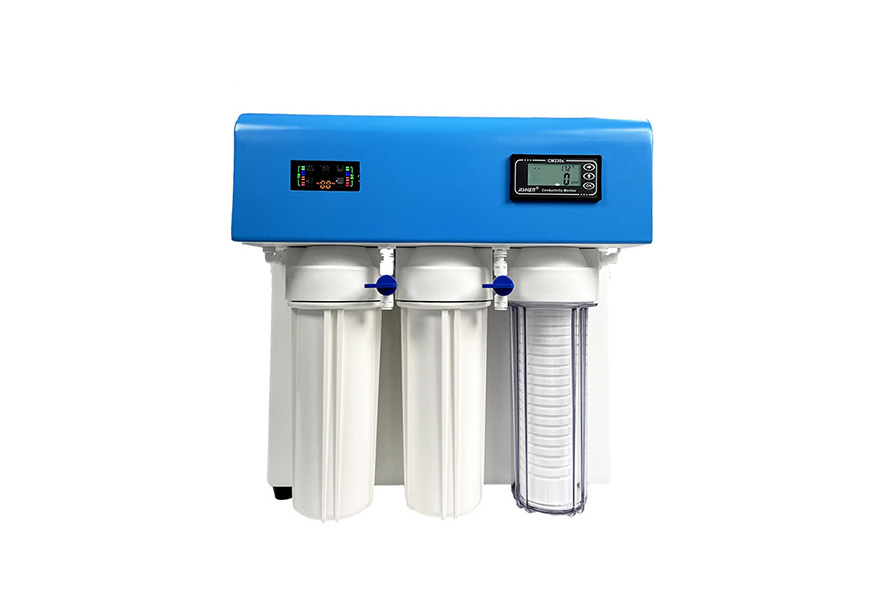



Reverse osmosis membrane (RO membrane) is the "heart" of a pure water machine, directly determining the quality of the effluent water. However, many people do not know how often to replace it - replacing it too early wastes money, replacing it too late reduces filtration capacity, and may result in drinking unfiltered water. In fact, the replacement cycle of RO membrane is not a fixed value. It mainly depends on these four key factors. Learning to judge can avoid "blind replacement".
1、 First, let's take a look at the "basic lifespan": most RO membranes can last for 2-3 years
The mainstream RO membranes on the market (whether imported or domestically produced) have an official recommended lifespan of 2-3 years under ideal usage conditions. The 'ideal conditions' here refer to:
The raw water quality is good (such as municipal tap water that meets national standards and has low levels of scale and heavy metals);
Moderate daily usage frequency (3-4 person household, daily water production of 10-20L);
The pure water machine is well maintained (the pre filter element is replaced on time, and the machine is not idle or overloaded for a long time).
For example, many brands of RO membranes will be labeled with "rated total net water volume" (such as 4000L, 6000L). Calculated based on using 15L of pure water per day, a 4000L RO membrane can be used for 4000 ÷ 15 ≈ 700 days, which is about 2 years; 6000L can last for about 3 years, and this value can be used as a "basic reference".
2、 These 3 factors will 'shorten lifespan': replace in advance when encountering them
If the home meets the "ideal conditions", it can be replaced every 2-3 years. However, in the following three situations, the lifespan of the RO membrane will be significantly shortened, and it may need to be replaced every 1-1.5 years, otherwise it will affect the water quality:
1. Poor quality of raw water: RO membrane "too heavy load"
If there is a lot of scale (hard water) and obvious odor in the tap water at home, or if you live in an industrial area or suburban area (where the raw water may contain more sediment and heavy metals), the RO membrane needs to filter more impurities, and if it is in a "high load" state for a long time, the membrane pores are easily blocked, and the lifespan will be shortened by 30% -50% compared to normal conditions.
For example, some users in hard water areas in the north may experience "slow water production and odor in the effluent" after 1.5 years of use of RO membranes. At this time, they cannot wait for 2 years and need to be checked and replaced in advance.
2. Pre filter element not replaced on time: RO membrane 'implicated'
Many people only focus on RO membranes, but overlook the pre filter elements (PP cotton, activated carbon) - these filter elements are the "protective shield" of RO membranes, responsible for filtering out large particles of impurities such as sediment, rust, and residual chlorine, reducing the burden on RO membranes.
If the pre filter element is not replaced for more than 12 months, impurities will directly penetrate the pre filter element and adhere to the surface of the RO membrane, leading to premature aging of the RO membrane. For example, some users have not replaced the pre filter element for 3 years, resulting in the RO membrane being scrapped within 1 year, and instead spending more money on membrane replacement.
3. Long term idle or overloaded machine: RO membrane is prone to damage
-Long term idle: If there is no one at home for a long time (such as 1-2 months on a business trip), the residual water in the machine will breed fine dirt and scale on the surface of the RO membrane. When used again, these impurities will block the membrane holes, making it difficult to recover even after rinsing, and the lifespan will naturally be shortened;
-Overloaded use: For example, if a household of 5 people uses an RO membrane with a "rated net water capacity of 4000L", but consumes a large amount of pure water every day (such as washing dishes, vegetables, and milk powder), and the daily water production exceeds 30L, the RO membrane will reach the "rated total net water capacity" ahead of schedule and may need to be replaced in 1.5 years.
3、 Learn the "3 Judgment Methods": You can check on your own without waiting for prompts
In addition to checking the time, it is more accurate to determine whether the RO membrane should be replaced based on "actual performance". These three methods are simple and easy to operate, and beginners can also learn:
1. Checking TDS values: the most intuitive "water quality testing"
The TDS value (total dissolved solids) can reflect the amount of impurities in water, and a household TDS pen (costing tens of yuan per pen) can measure:
-Under normal circumstances, the TDS value of pure water filtered by RO membrane should be ≤ 50ppm (the lower the value, the better the water quality);
-If the TDS values measured continuously for a week exceed 100ppm, or are more than 50ppm higher than when the membrane was first installed (such as 20ppm before, now 80ppm), it indicates that the filtration capacity of the RO membrane has decreased and needs to be replaced.
2. Check the water production speed: slowing down may be due to membrane blockage
When using a new RO membrane to produce water, it usually only takes 10-15 seconds to add a 200ml cup of pure water (with slight differences depending on the flux); If it is found that the water production speed has significantly slowed down, such as taking more than 30 seconds to receive the same cup of water, and the machine still does not improve after rinsing, it is likely that the RO membrane holes are blocked by impurities and need to be replaced.
3. Seeing the feeling of water outlet/scale: the senses can also distinguish between good and bad
-Taste: If pure water has a "astringent" or "fishy" taste when consumed, or a taste similar to that of boiled tap water, it indicates that the RO membrane has not been fully filtered and may have failed;
-Scale: After boiling with pure water, there should be no obvious scale on the bottom of the pot; If scale suddenly appears, it indicates that the RO membrane has not filtered out calcium and magnesium ions, and the filtration function has failed, requiring replacement.
4、 Two precautions for replacing RO membrane: Don't waste money unnecessarily
1. Choose the right model: Do not buy "special shaped film"
Different brands of pure water machines may have different RO membrane models (such as 50G, 75G, 400G, or specific sizes). Before replacing, please refer to the "RO membrane model" in the machine manual or remove the old membrane and check the label on it (such as "RO-400G-1812") to avoid buying the wrong one and not installing it properly.
**Avoiding pitfalls: Do not buy "branded special shaped films" - these types of films can only be purchased from branded stores and are more than 50% more expensive than general films; Priority should be given to selecting "universal RO membranes" (such as 1812 and 2012 models). As long as the size and flux match, the universal membranes of domestic brands (such as Huitong and Times Walton) have higher cost-effectiveness and guaranteed filtration efficiency.
2. Rinse after replacement: avoid drinking protective solution
When the new RO membrane leaves the factory, it will be coated with a "protective solution" (to prevent the membrane from drying out). After installation, it cannot be used directly - the machine should be run without load for 15-20 minutes, the protective solution should be washed clean, and the TDS value should be measured to confirm that it is ≤ 50ppm before drinking water. Otherwise, there may be a "strange smell" that affects health.
In short, RO membranes do not need to be replaced at the right time, nor should they be replaced only when they break down. Based on a 2-3 year cycle, combined with the quality of the raw water and the replacement of the pre filter element, and then judged by TDS values, water production speed, and taste, they can be replaced only when necessary, ensuring complete water quality without wasting money. Remember: Regular maintenance of the pre filter element is the most cost-effective way to extend the lifespan of the RO membrane!